
Beyond
Tomorrow
Moscow, Russia · 2022
A bespoke office furniture collection that brings an imagined future into physical form.
Beyond Tomorrow began with an ambitious brief: to create furniture with an entirely unfamiliar presence, each piece appearing to belong to a world yet to come.
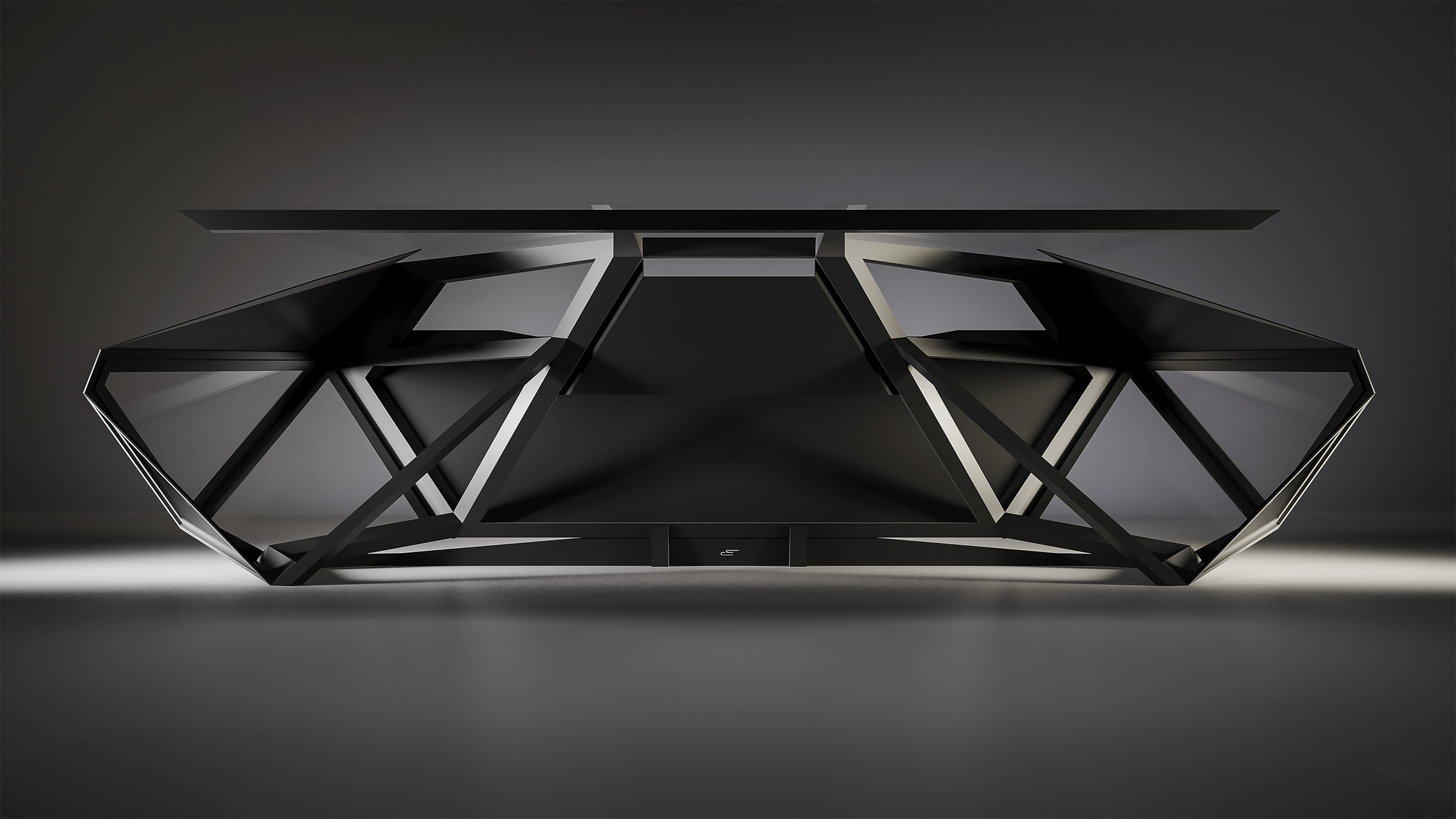
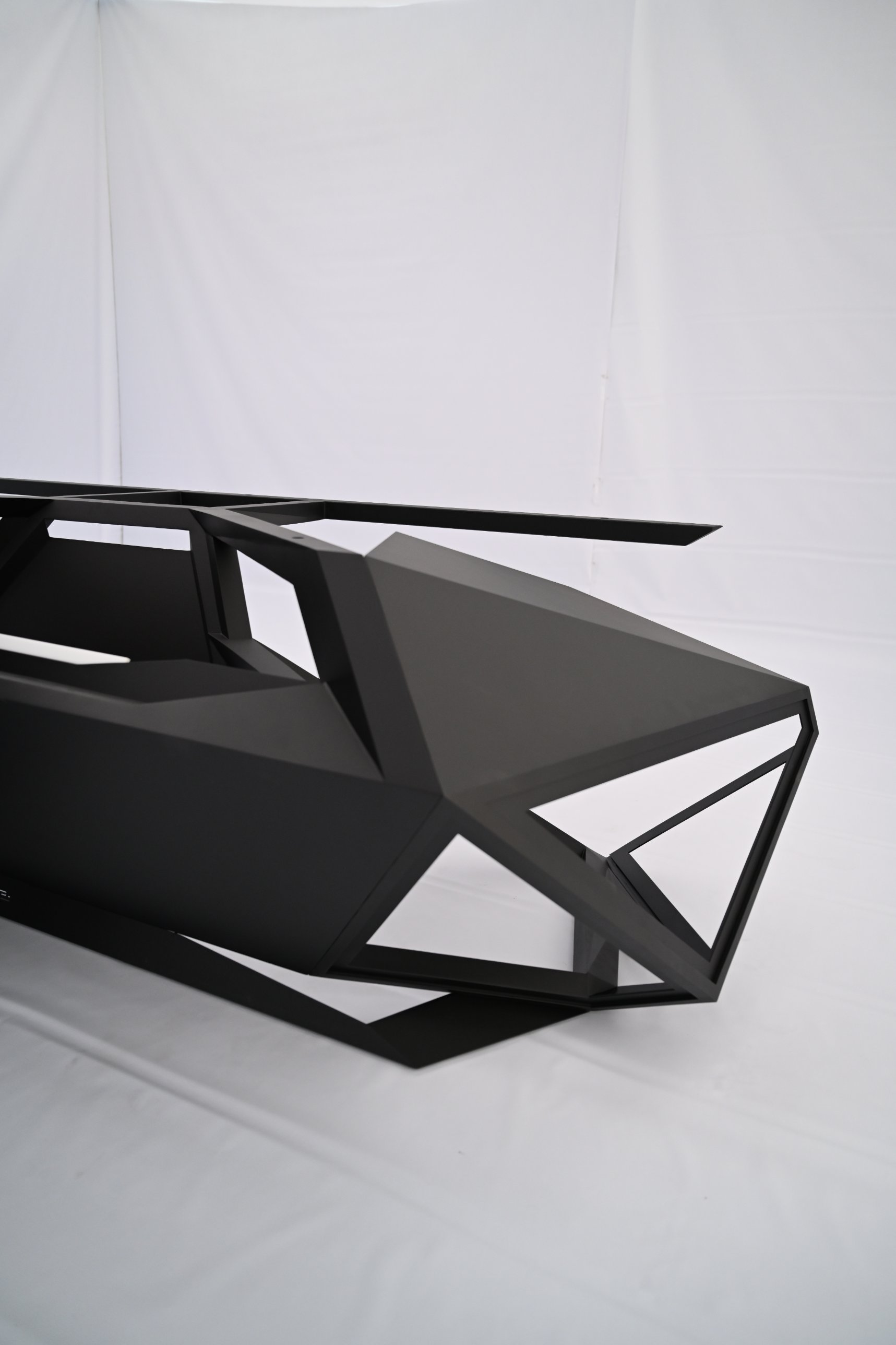
Designed for an office in Moscow, the collection explores sharp geometry, reflective surfaces and integrated light. The desk, table and side cabinet share a distinct architectural language, with intersecting planes and faceted volumes that change dramatically with the viewpoint.
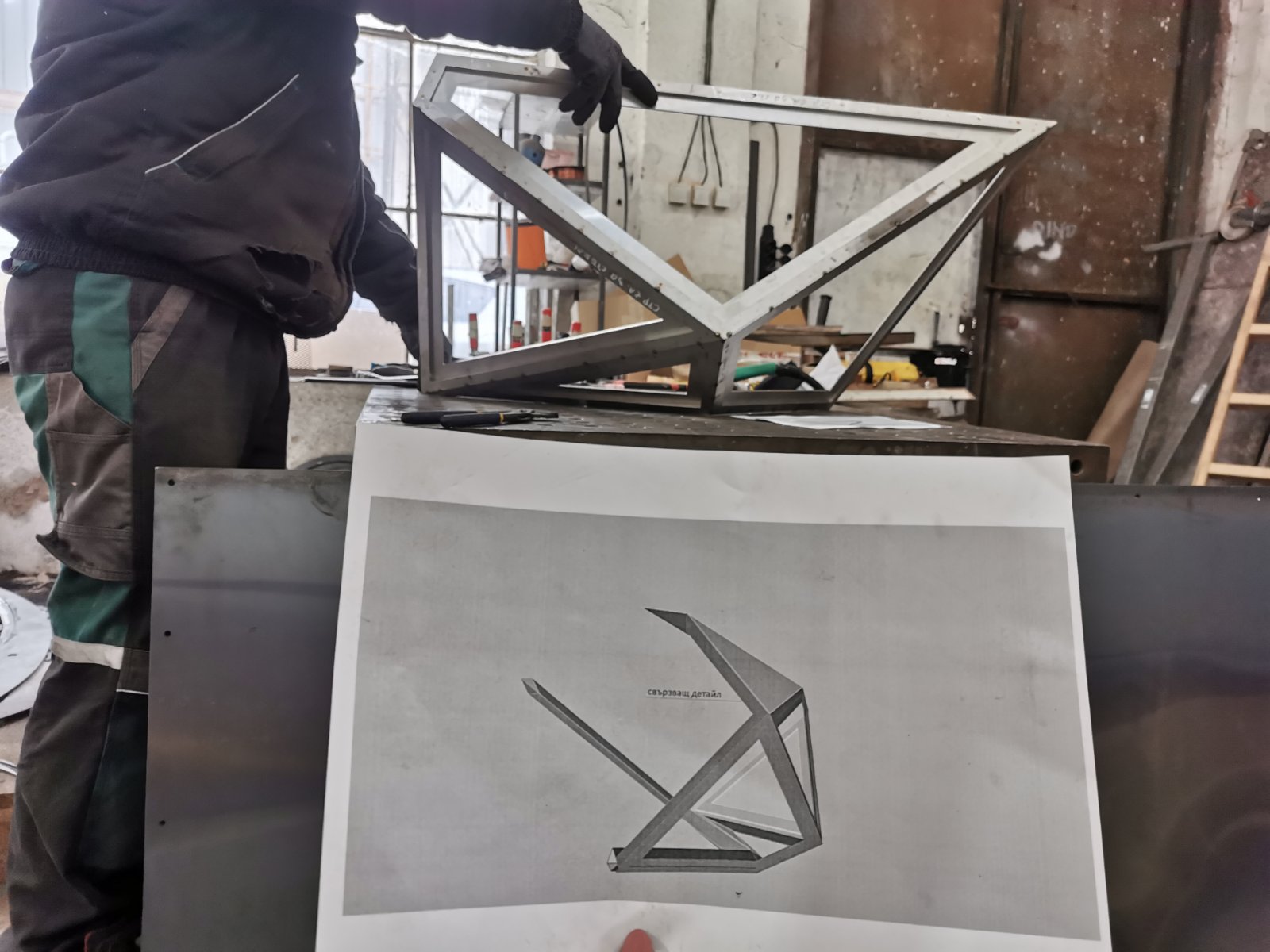
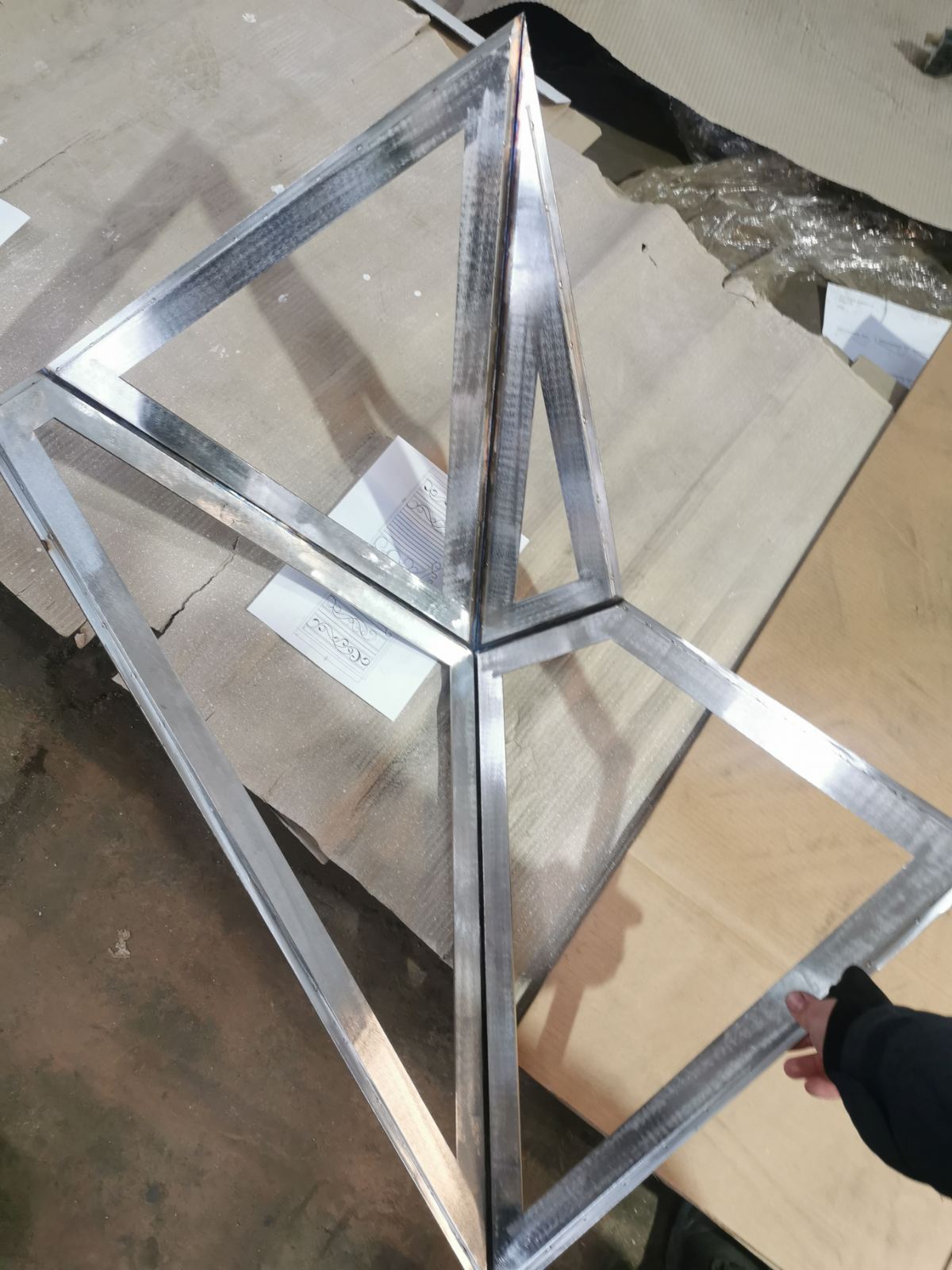
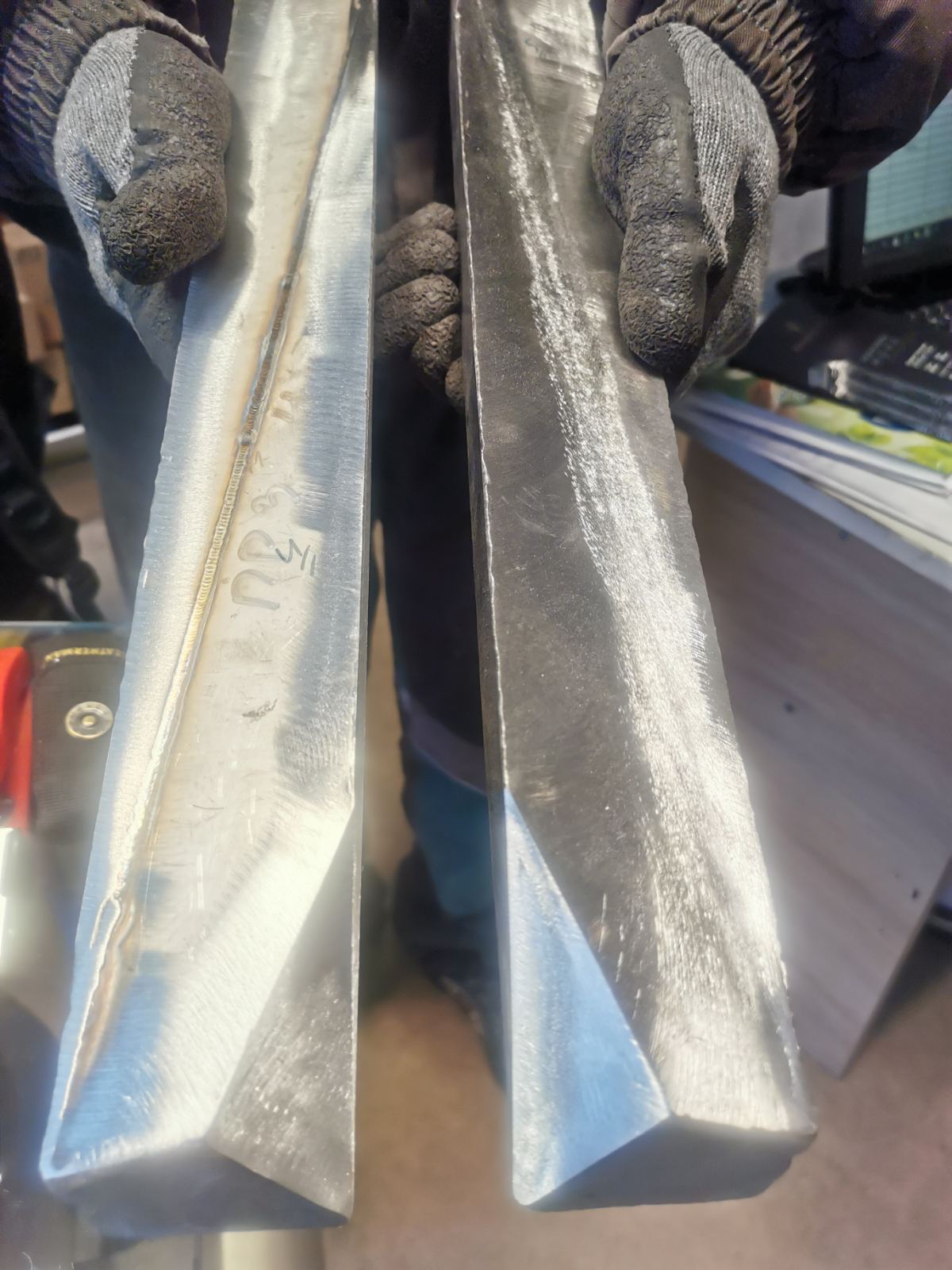
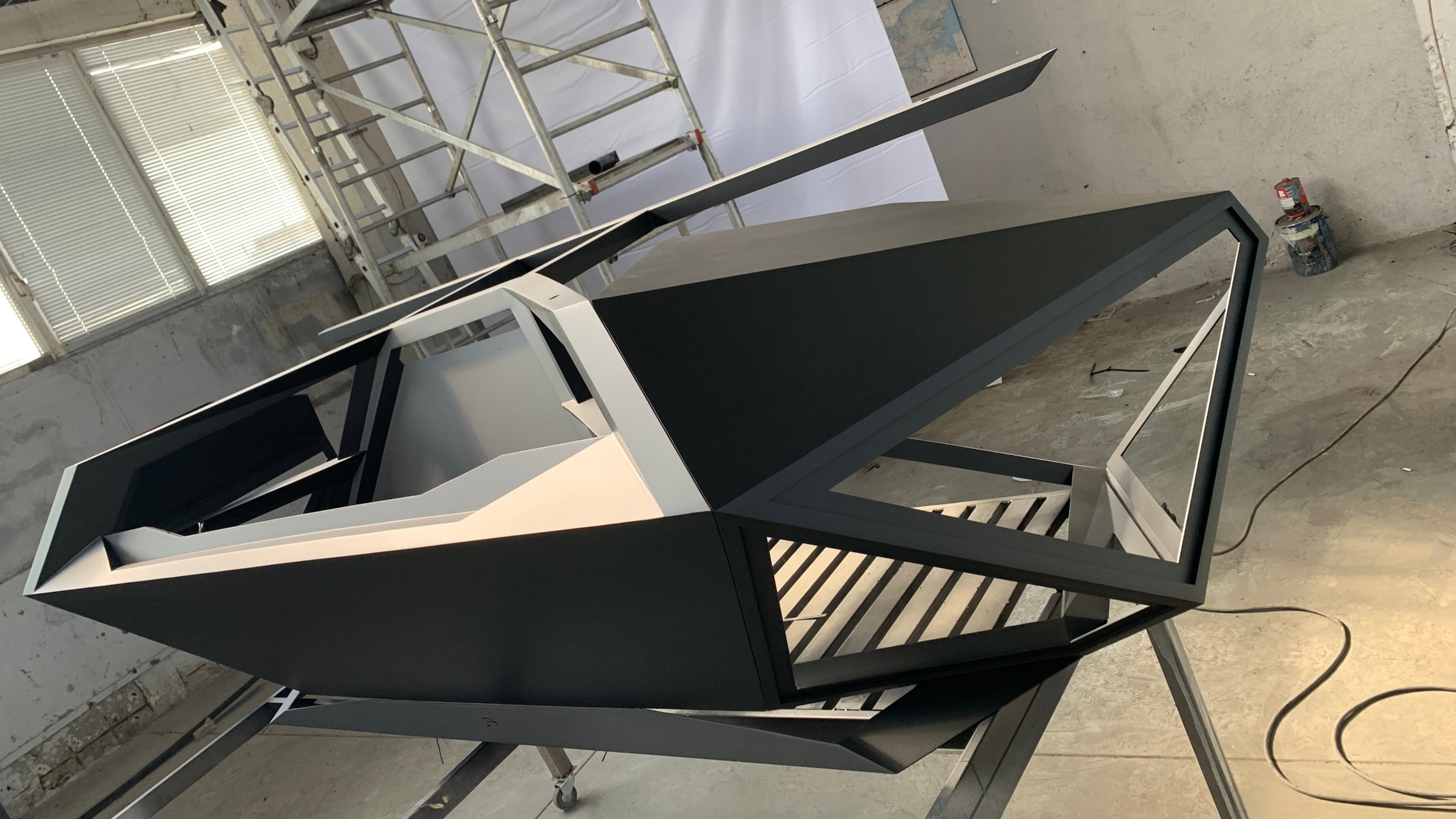
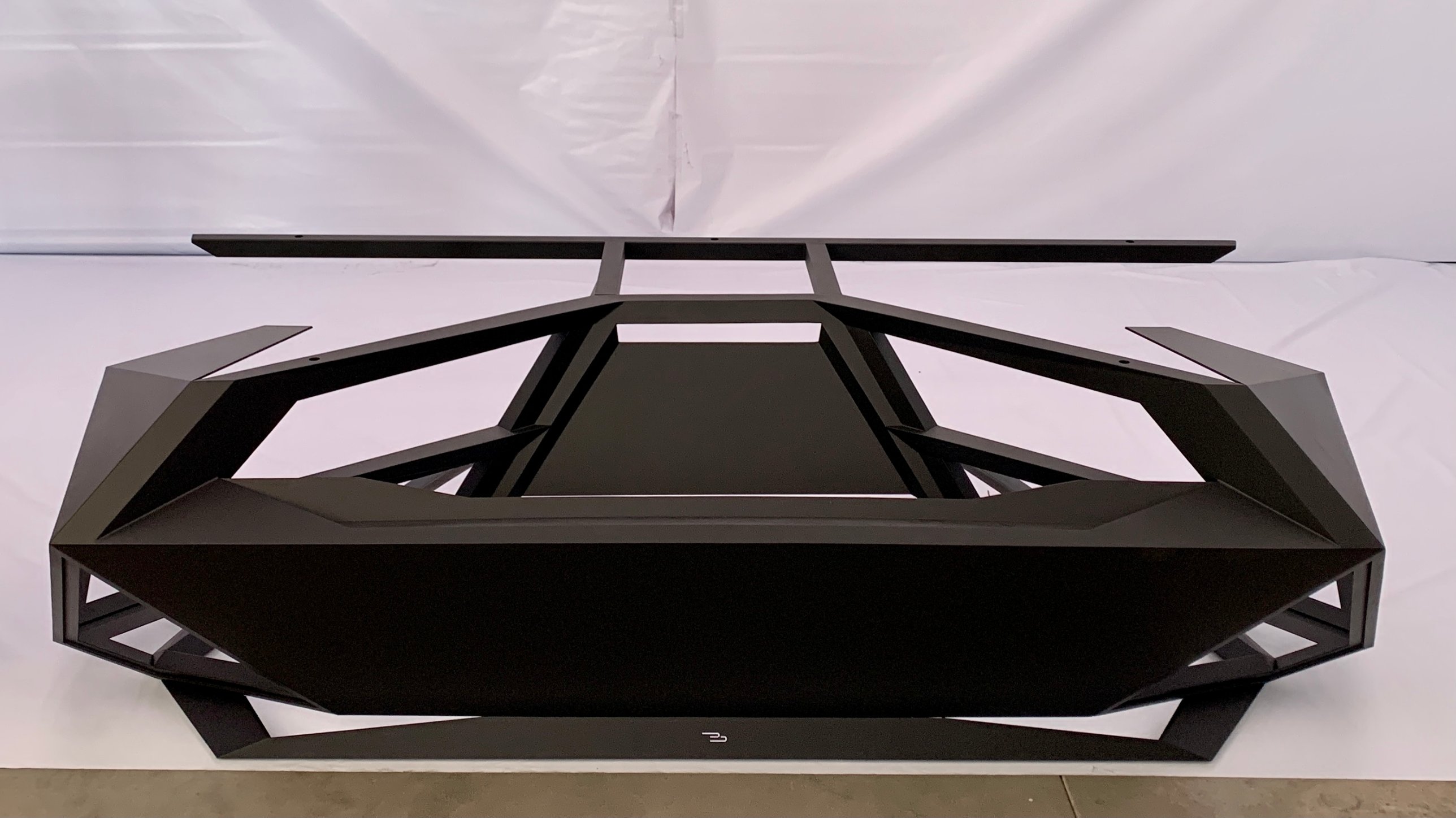
Realising these forms demanded as much invention as designing them. The stainless-steel bodies were assembled from numerous individual components, welded together like a vast three-dimensional puzzle. The desk alone contains 267 pieces. Behind the apparent continuity of each surface lies a complex process of fabrication, alignment and finishing.
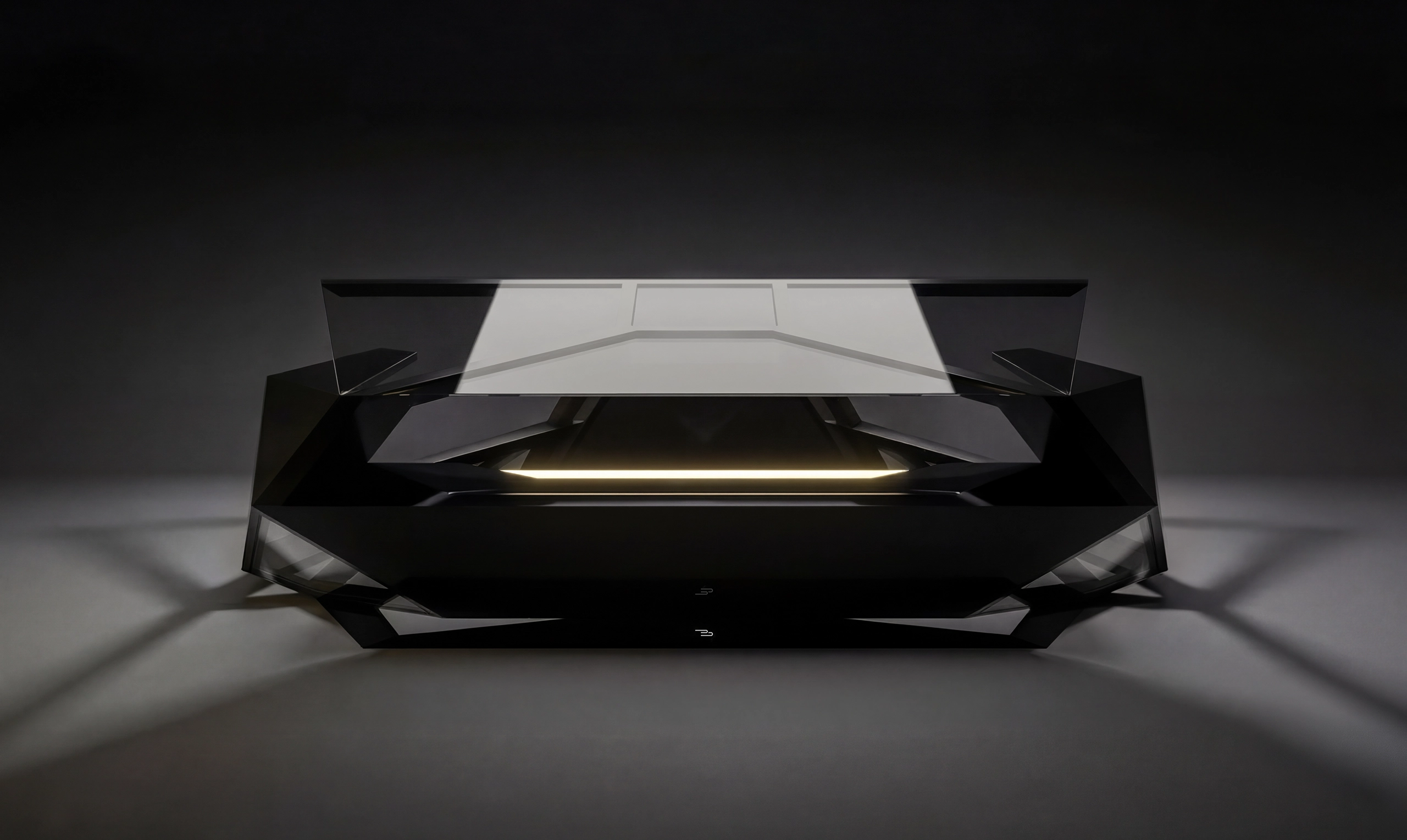
The collection gives everyday functions an unexpected form. Angular silhouettes, deep recesses and intersecting surfaces create objects with a strong sculptural identity. Each piece was conceived individually, while sharing the same proportions, material contrasts and precision of detail.
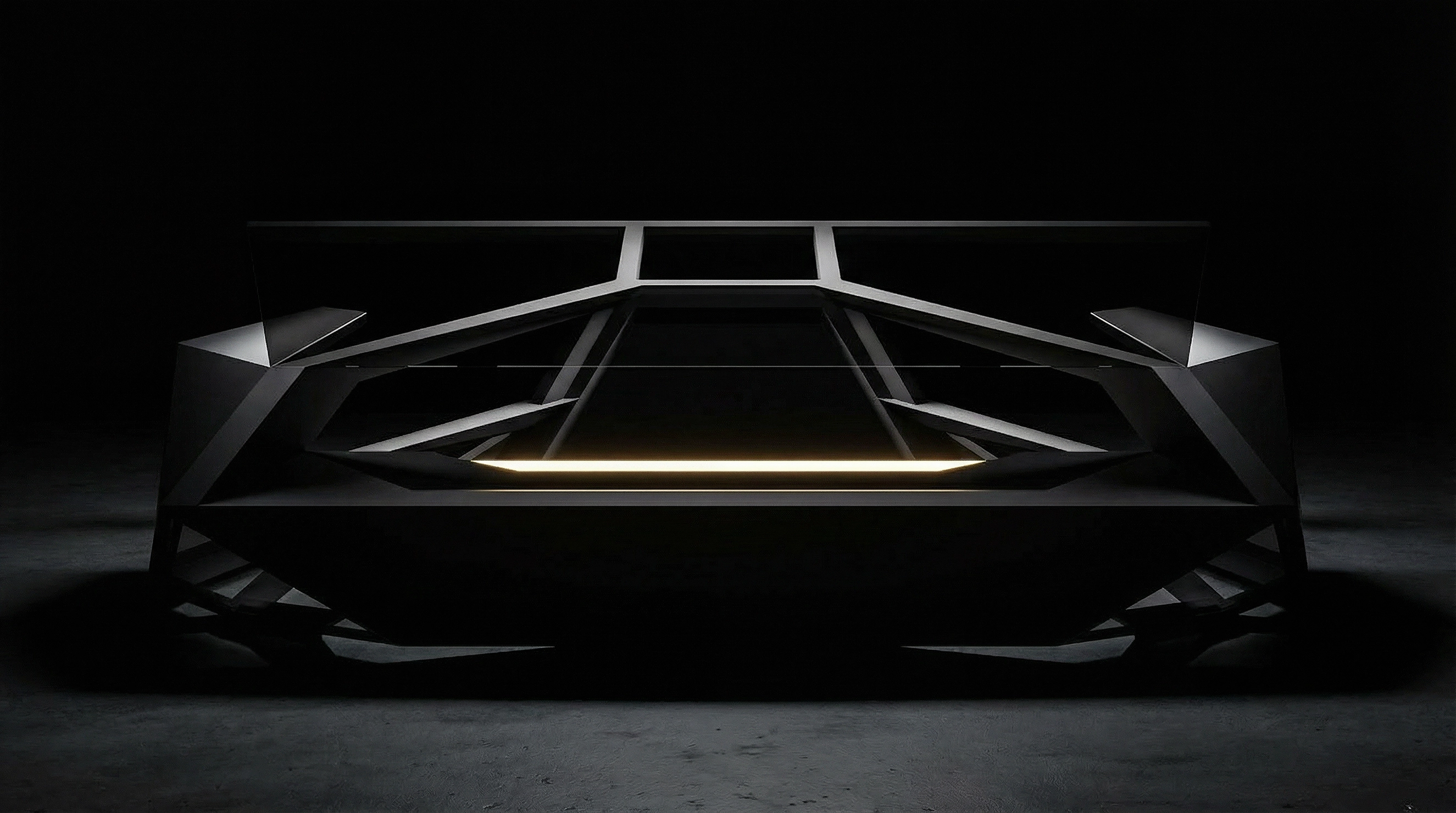
The desk is the most intricate expression of the project’s geometry. Its stainless-steel body brings together 267 individual pieces, welded into a structure weighing approximately 300 kilograms.
Faceted supports extend beneath the glass top, revealing a composition of solid planes and open spaces. From one angle, the desk appears dense and monumental; from another, its structure opens up, allowing light and views to pass through.
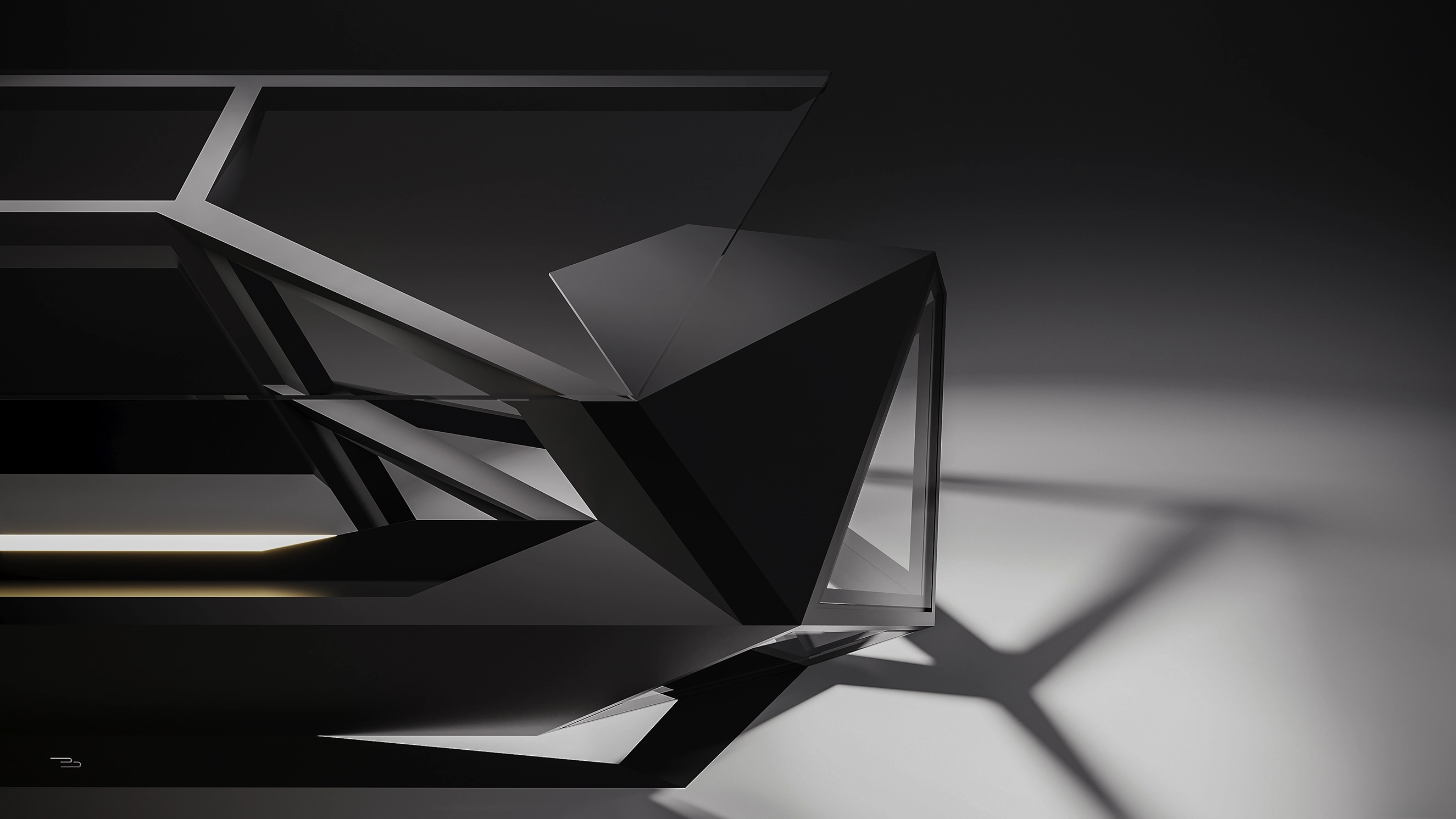
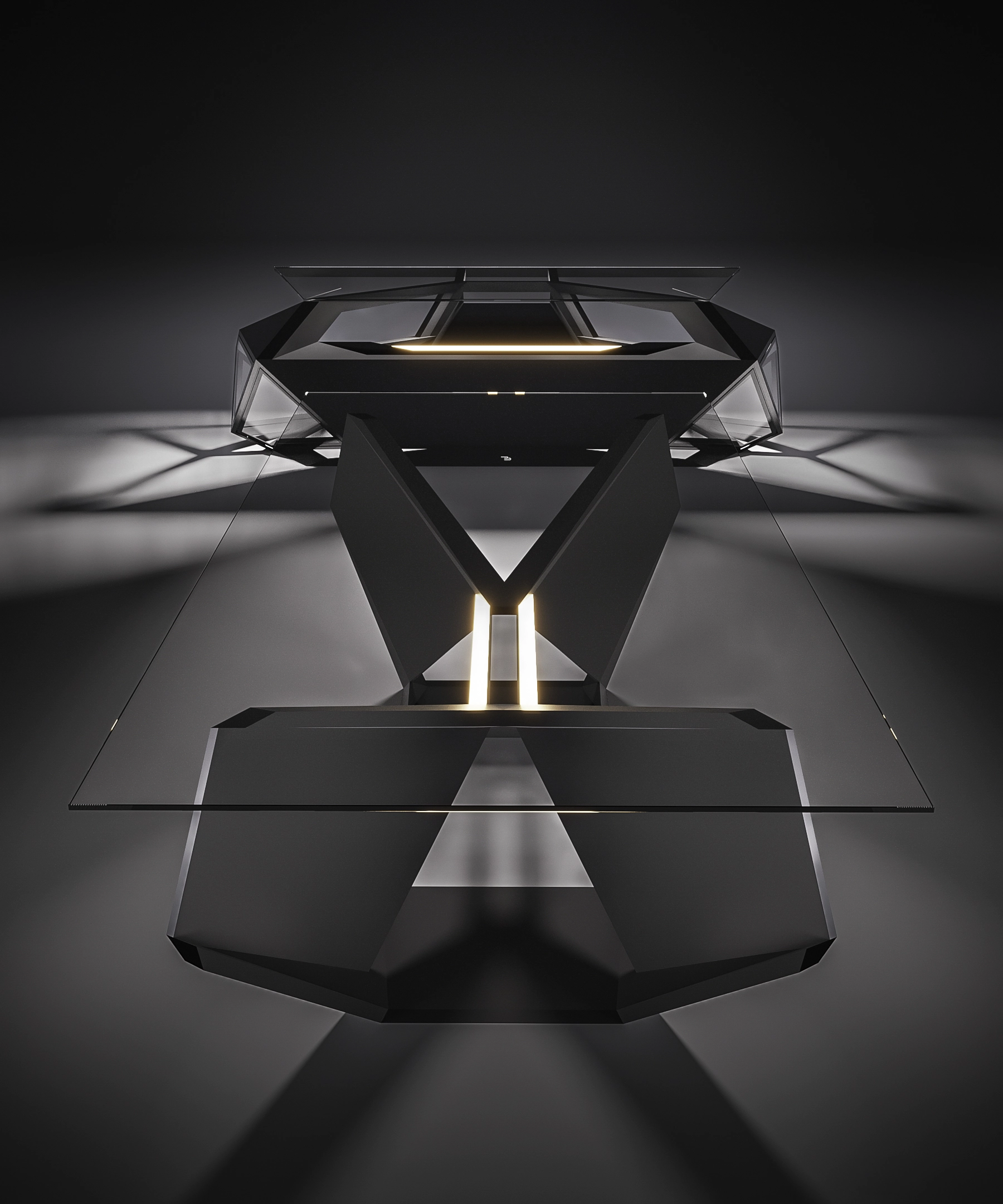
The glass tabletops keep the steel geometry visible, making the supporting structures part of the experience of using each piece. Reflections introduce another layer, overlapping with the angular forms below.
The table carries this relationship into a more open composition. Two sculptural supports frame a central line of light, giving the piece a clear direction and a distinctive profile.
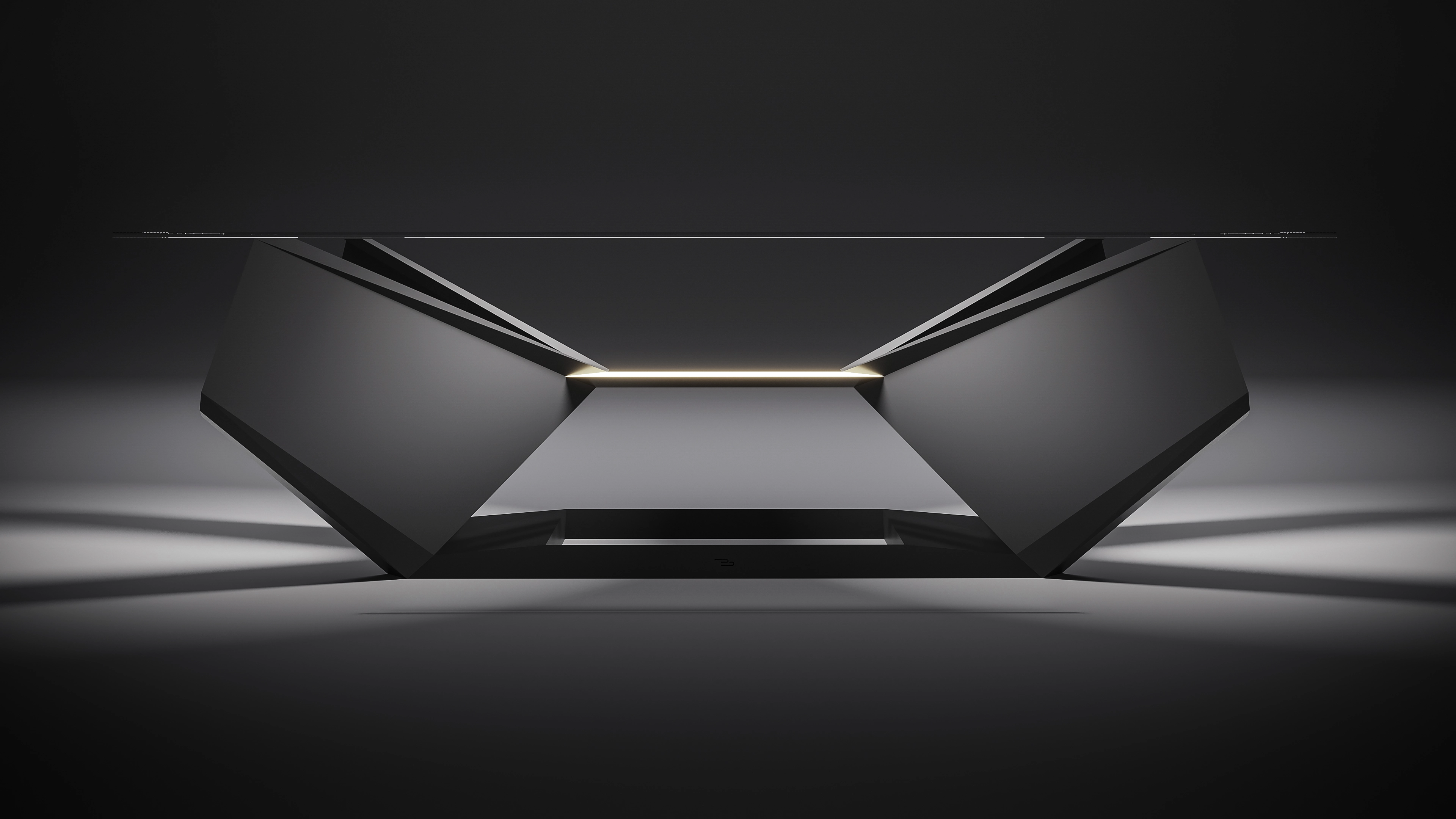
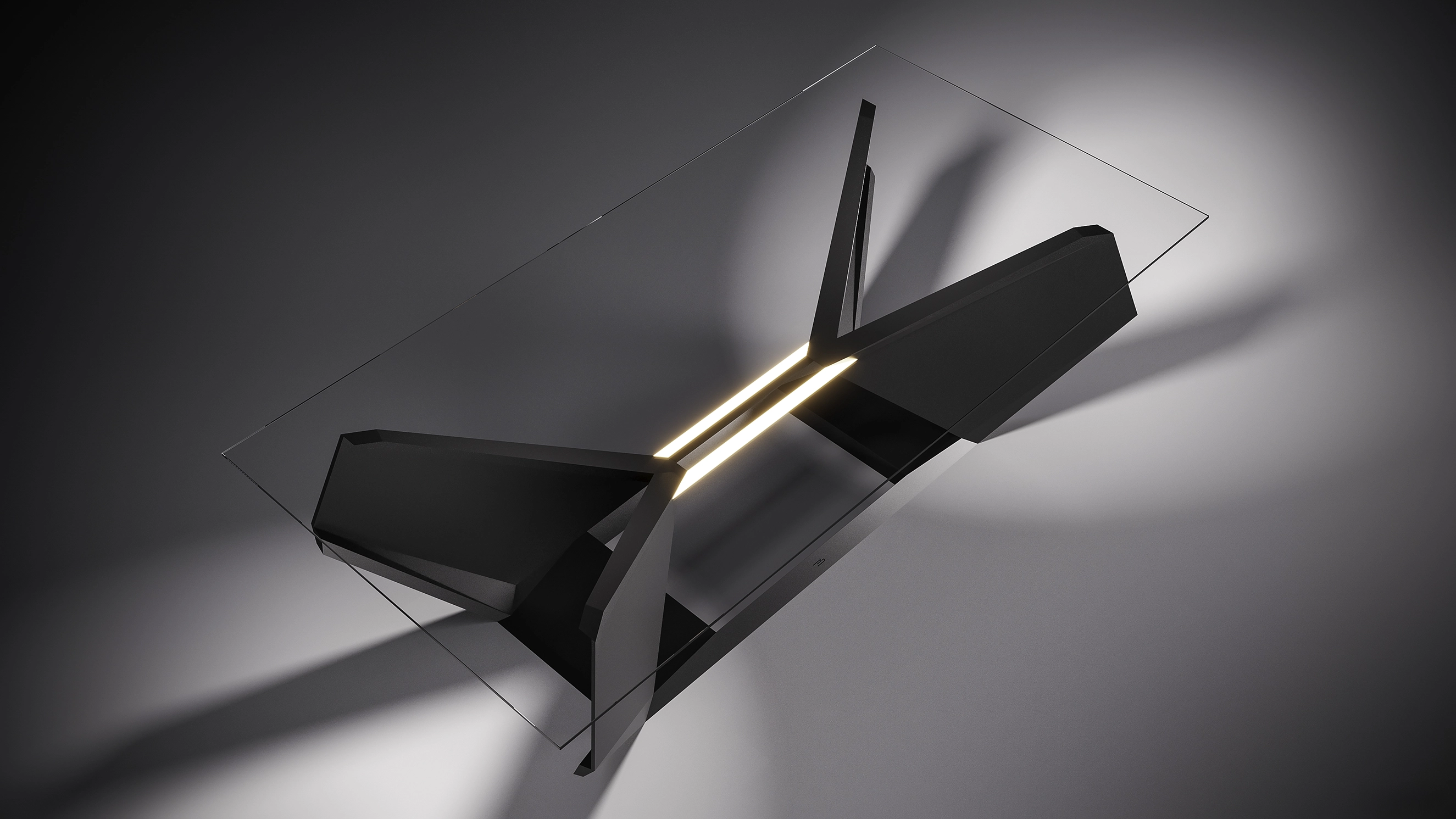
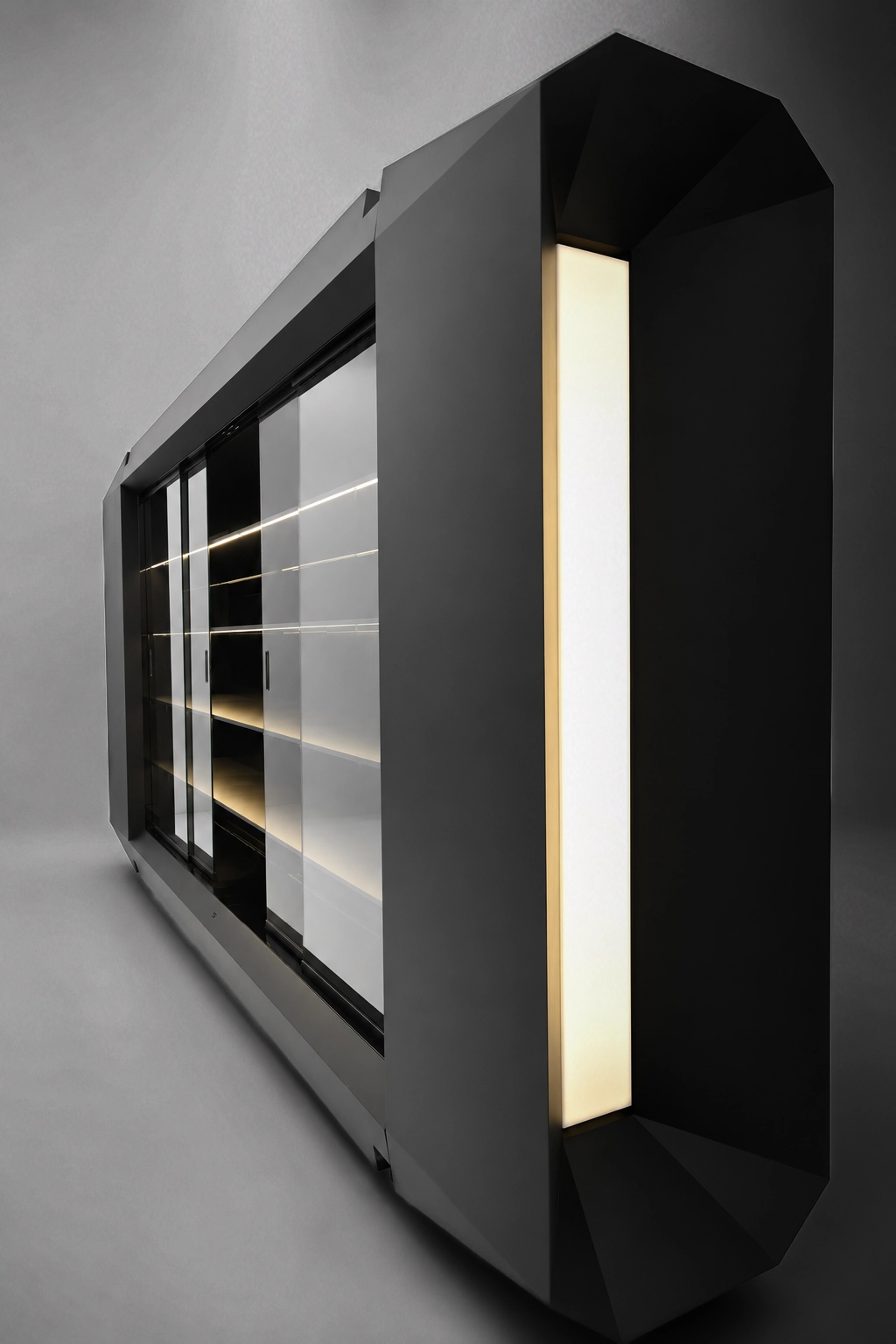
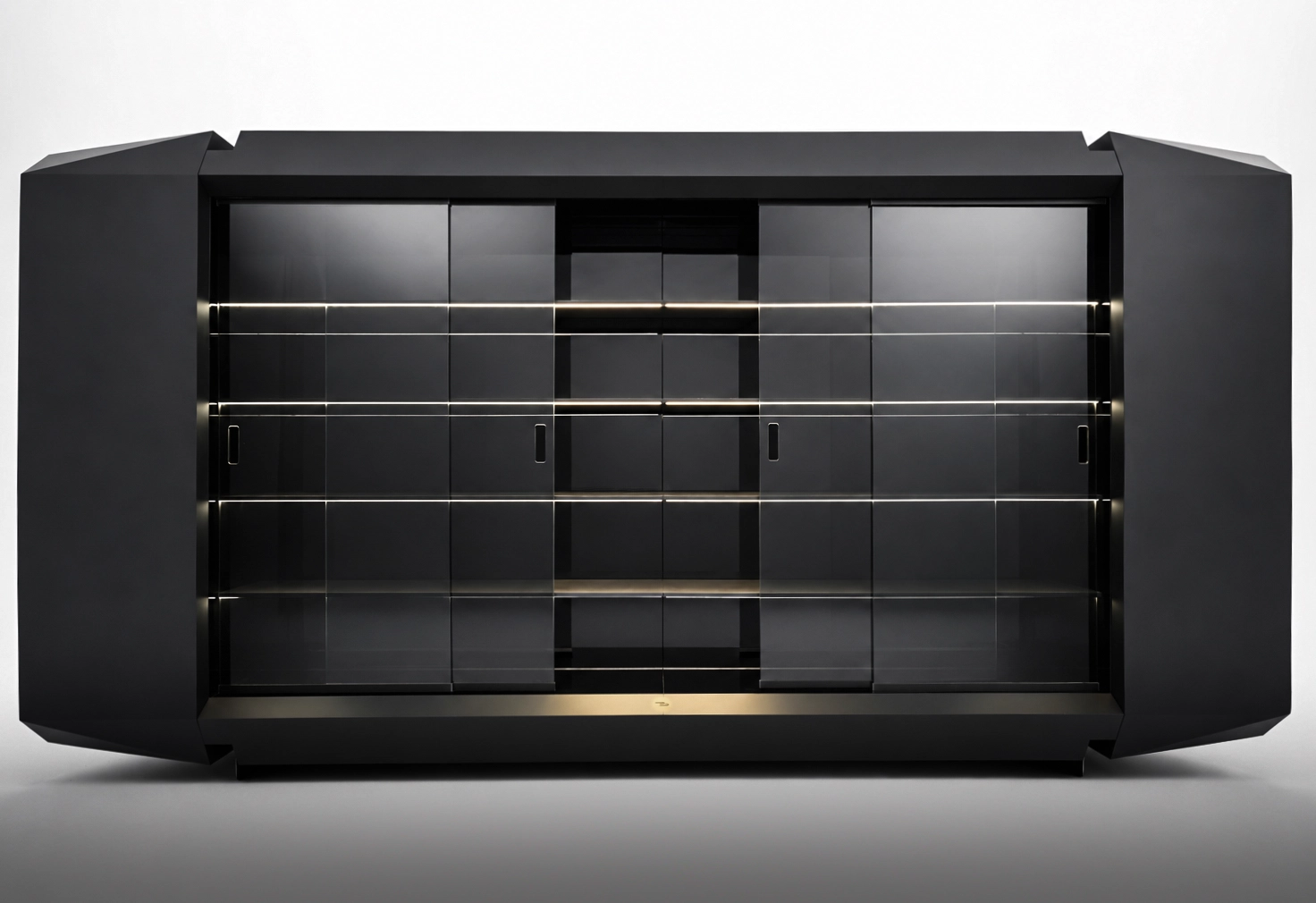
The side cabinet translates the collection’s angular language into a substantial storage piece. Weighing almost 1,000 kilograms, it has the presence of an architectural installation.
A deeply framed centre is enclosed by faceted end volumes. Horizontal lines of light extend across the shelving, bringing depth and rhythm to the dark surfaces. Storage becomes an integral part of the composition, held within a strong, unified outline.
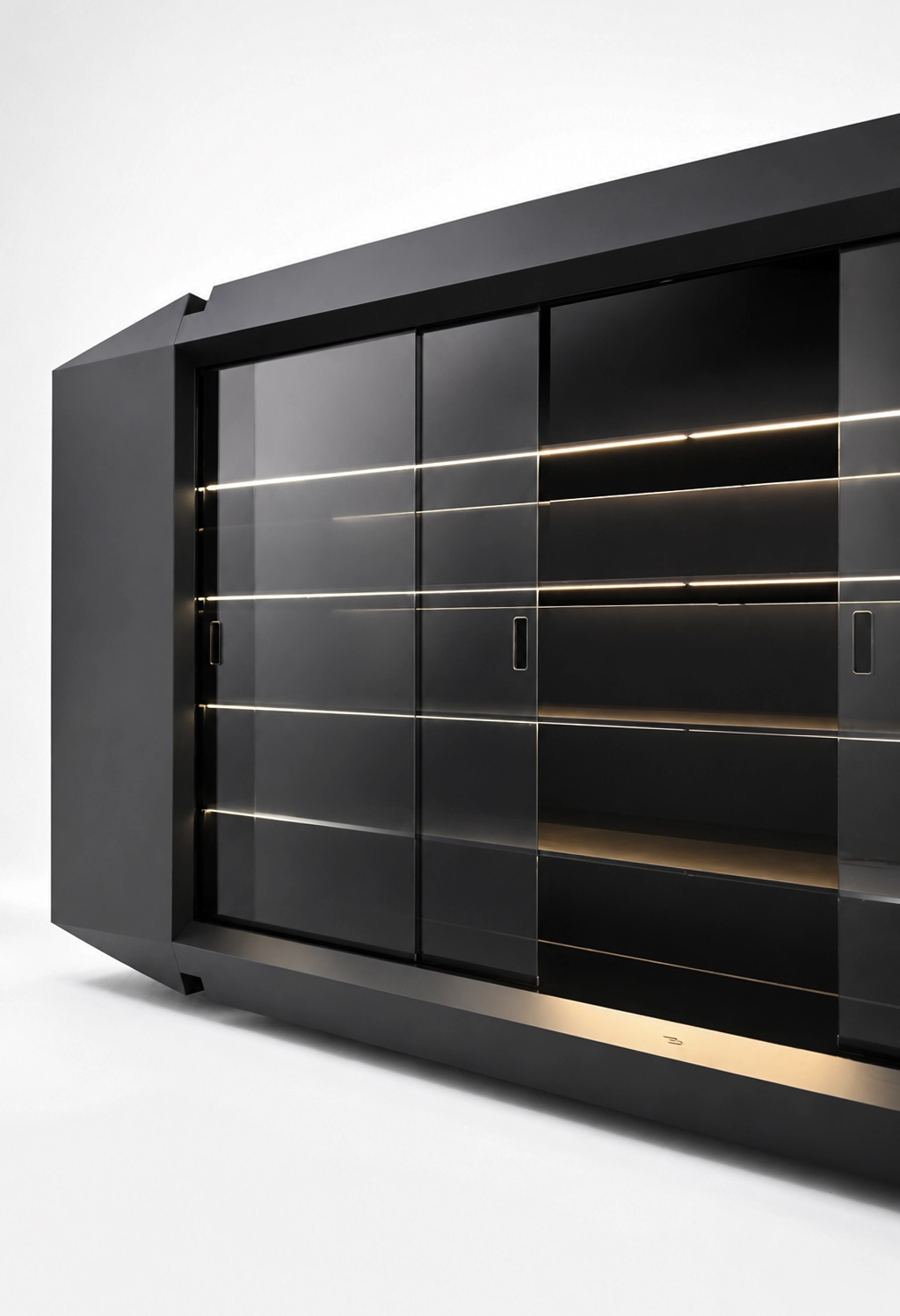
Integrated lighting emphasises the spaces between surfaces, tracing the desk’s interior, the table’s central axis and the cabinet’s horizontal divisions.
Warm light contrasts with the black steel and glass, revealing depth within the darker forms. Reflections carry that light across adjacent planes, allowing the geometry to remain legible even in a subdued setting.
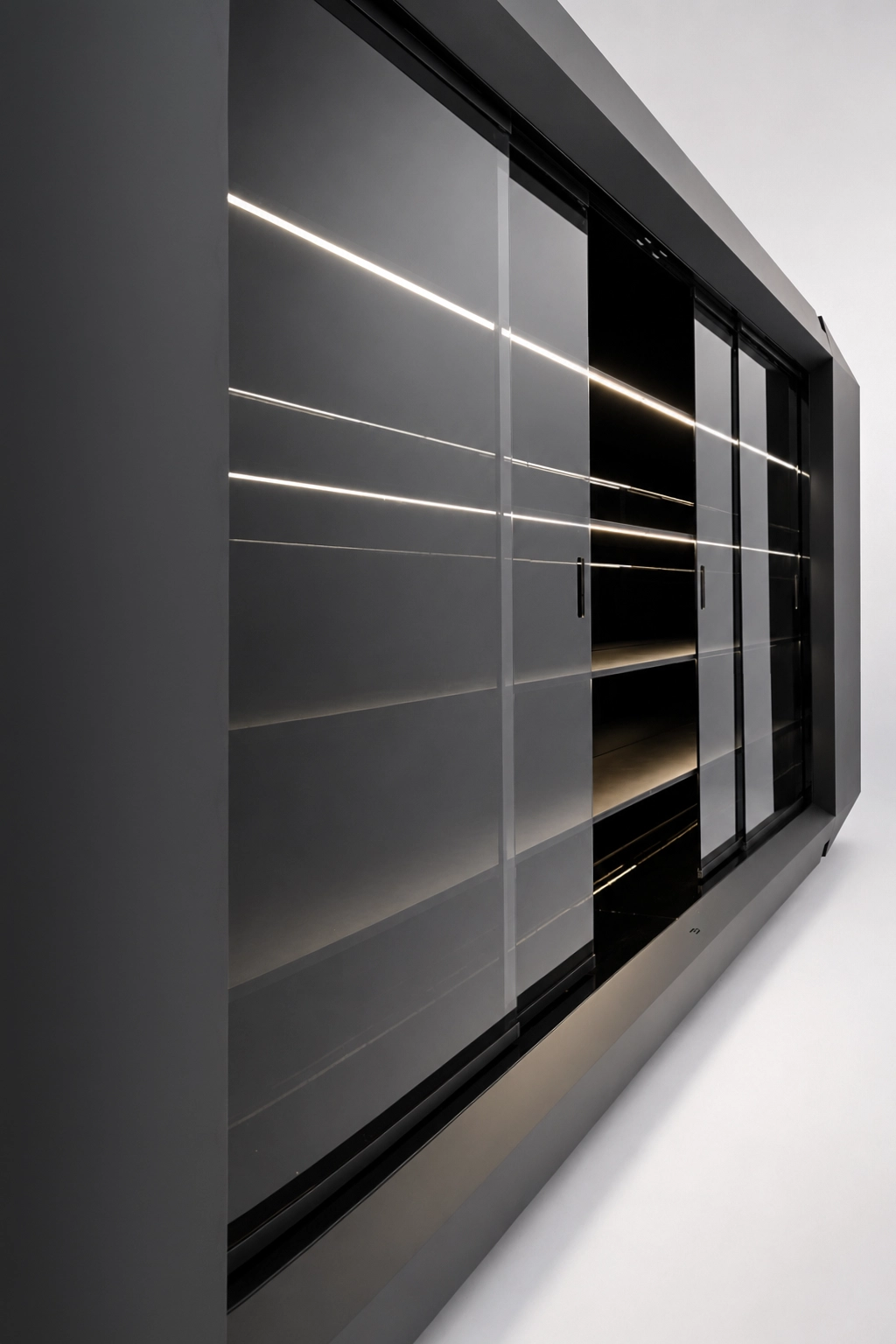
Producing the collection required translating complex geometry into individual stainless-steel components that could be assembled and welded with precision. Every junction contributed to the alignment of the whole.
The challenge continued through finishing: bringing the separate elements together visually, while preserving the sharp transitions and deliberate changes of plane that define the design. The scale and weight of the pieces made this process particularly demanding.
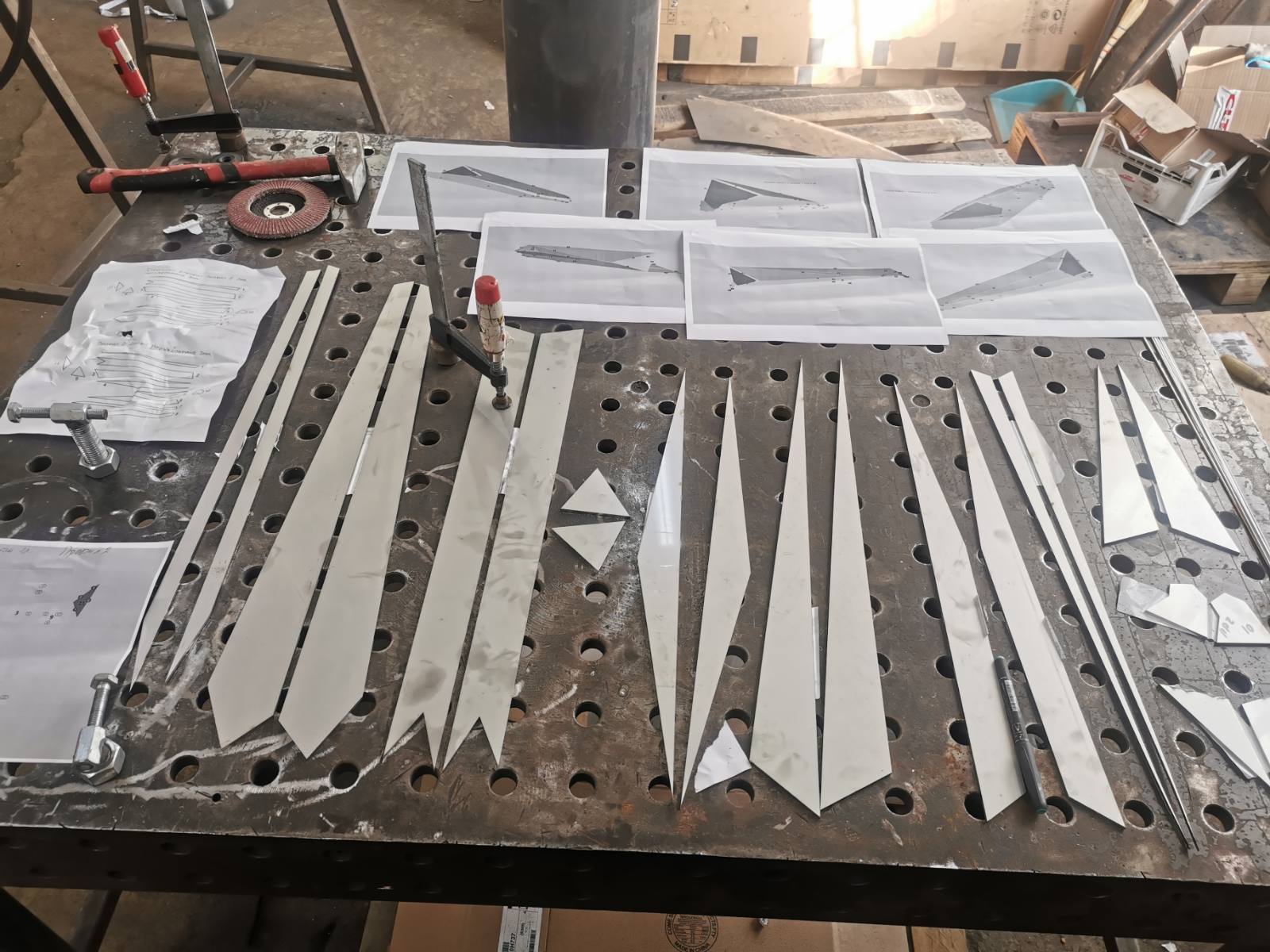
Beyond Tomorrow represents a close relationship between design and making. Its character comes from both the unfamiliar forms and the work required to realise them.
The completed collection gives a physical presence to an imagined future—expressed through stainless steel, glass, light and hundreds of precisely joined parts.
